Sustainable Office Move Checklist: What Happens to the Furniture and Waste in Sydney
Sydney Office Clearance Team
Office Exit Management & Commercial Clearance
- •The 4-step sequence: Keep useful items, Reuse where practical, Separate e-waste and data, and Dispose of the rest properly.
- •You do not have to sort it yourself. Tell us what is staying, what is going, and your handover date; we coordinate sorting on site.
- •The lease handover comes first: reuse efforts should never put your lease deadline or handback schedule at risk.
- •Records for sustainability and climate reporting are labelled honestly: Verified, Estimated, Pending, or Unknown.
Moving out of a commercial office in Sydney involves demanding lease deadlines, building protocols, and logistical coordination. For facilities directors, workplace managers, and sustainability teams, the goal is stopping quality furniture from becoming waste. The most common mistake is treating everything as rubbish from day one. When time runs out, good desks, chairs, and screens end up in the same pile as everything else. Here is the simple 4-step sequence to manage furniture and waste when moving out: Keep, Reuse where practical, Separate e-waste and data, and Dispose of the rest properly through lawful pathways.
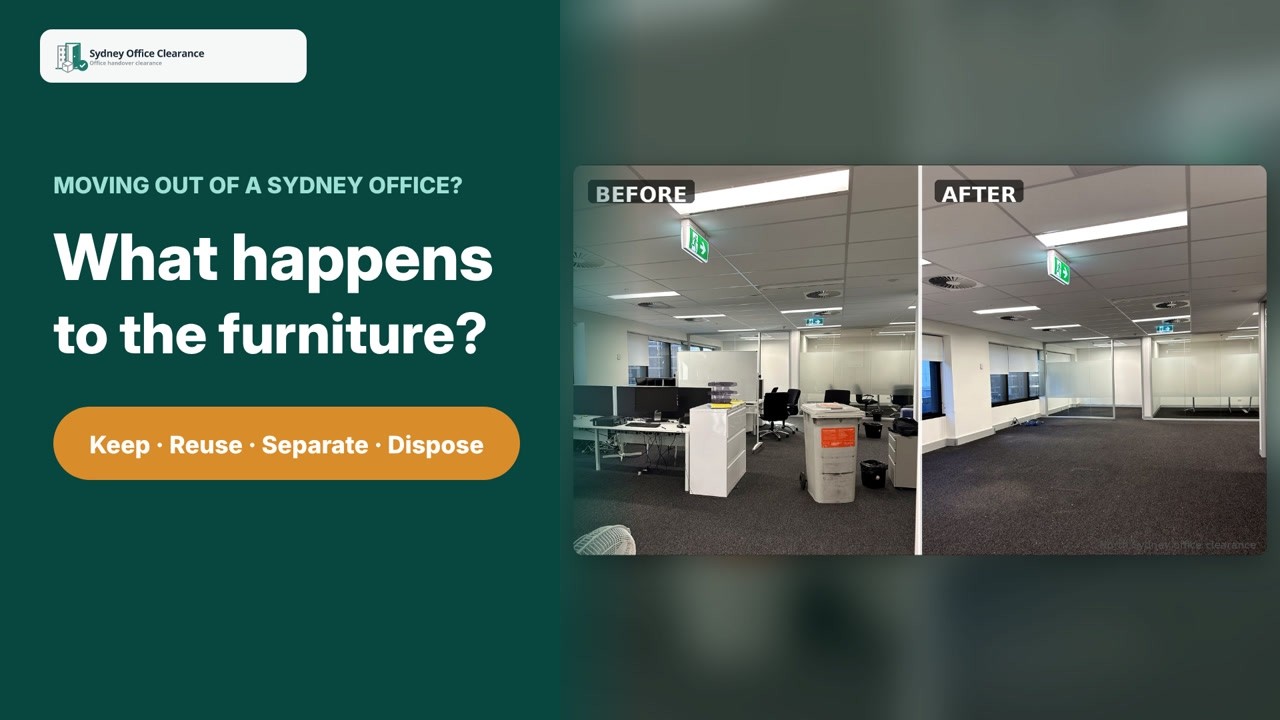
Keep, reuse where practical, separate e-waste, and dispose properly under NSW law
Moving out with a sustainability target?
Send your office photos and handover date for a photo-reviewed quote.
Video Chapters (Watch on YouTube)
4 min 56 secRead Full Video Transcript (4:56)
You're moving out of an office in Sydney. Some furniture is going to the new site. Some still has value. Some of it is e-waste. And some of it just needs to go before handover. So what should happen to all of it? In this video, we'll walk you through it, step by step.
The most common mistake is treating everything as rubbish from day one. When time runs out, good desks, chairs, and screens end up in the same pile as everything else. A little planning early on changes that.
Here's the simple order we work through. Keep. Reuse. Separate. Then dispose of the rest properly.
Step one. Keep. What can stay in use? That might be chairs going to your new office, screens for another team, or furniture moving to another floor. Keeping useful furniture in use is often the simplest way to stop it becoming waste in the first place.
Step two. Reuse, where it's practical. Good furniture can sometimes go to a buyer, to your staff, or to a charity, where a suitable recipient is available. But to be honest, not everything has a second home. Condition, demand, and time all matter. We're still building our reuse network, so we'll tell you honestly when we review your scope.
Step three. Separate. E-waste and data. Screens, cables, servers, and power boards should be kept apart from general waste, where practical. NSW doesn't currently have the broad e-waste landfill ban that was proposed in 2025. But separating e-waste lets components and metals be recovered properly. And if you have drives or devices holding sensitive company or customer data, that needs certified data destruction from a specialist. We can help you arrange that.
Step four. Dispose properly. Under NSW law, waste must go to a facility that can lawfully accept it. The waste owner and the transporter can both have legal responsibilities. So anything that still needs disposal follows the agreed disposal pathway for the job.
And here's the good part. You don't have to sort any of this yourself. Just tell us what's staying, what's going, and when the office needs to be handed back. We coordinate the sorting on the day, within the agreed scope.
One rule sits above everything else. Reuse should never put your handover deadline at risk. If a buyer or recipient doesn't come through in time, the office still gets cleared on the agreed schedule. Reuse is the better outcome where it's practical. The handover comes first.
Now, if your facilities, procurement, or sustainability team needs records, tell us before we quote. Certain Australian companies now have mandatory climate-related financial reporting, including Scope 3 emissions information. Waste from their operations may be part of the records their sustainability or finance teams collect. We'll confirm what's practical for your job. That might include item counts, photos, furniture you kept, confirmed reuse transfers, separated streams, and facility receipts, where they're available and included. And every record is labelled honestly. Verified. Estimated. Pending. Or unknown. Unknown stays unknown.
Some projects also adopt their own circularity targets. The Better Buildings Partnership's strip-out guidance sets a sixty percent best-practice resource recovery target, for applicable office strip-out and refurbishment work. Green Star Fitouts also puts more weight on reuse and circularity. These aren't automatic requirements for every office clearance. But if they're in your lease or your project brief, tell us at the start, so the plan and the records match what's needed.
Here's what we won't claim. We don't claim zero waste. We don't claim one hundred percent recycled. We don't issue carbon credits. And we don't count a planned donation as completed reuse. The ACCC expects environmental claims to be accurate, and supported by evidence. We'd rather report less, and know it's right.
A few quick answers. Can you donate our furniture? Sometimes, where a suitable recipient is available, and the timing works. We'll tell you honestly when we review the scope. Can you give us a recycling percentage? Only if the records support it. Otherwise, it's labelled as an estimate, or unknown. And do we have to sort anything before you arrive? No. Just tell us what's staying.
Our tip? Start six to eight weeks before your lease ends. That gives good furniture time to find a new home, and keeps the handover calm.
Moving out of a Sydney office, with a reuse or waste target? Tell us when we review your scope. Send your office photos and handover date for a photo-reviewed quote. Sydney Office Clearance. You run the business. We coordinate the office exit.
The 4-Step Sequence: Keep, Reuse, Separate, and Dispose
A successful sustainable office relocation begins with a clear, realistic priority order rather than leaving decisions to the final week.
Step 1: Keep. What can stay in use? That might be chairs going to your new office, screens for another team, or furniture moving to another floor. Keeping useful furniture in use is often the simplest way to stop it becoming waste in the first place.
Step 2: Reuse, where practical. Good furniture can sometimes go to a buyer, to your staff, or to a charity, where a suitable recipient is available. But to be honest, not everything has a second home. Condition, demand, and timing all matter. We are still building our reuse network, so we will tell you upfront what is realistic.
Step 3: Separate e-waste and data. Screens, cables, servers, and power boards should be kept apart from general waste where practical. NSW does not currently have the broad e-waste landfill ban that was proposed in 2025, but separating e-waste allows metals and components to be recovered responsibly. Certified data destruction is done by a specialist, and we can help arrange it.
Step 4: Dispose properly under NSW waste law. In New South Wales, waste must go to a facility that can lawfully accept it. The waste owner and the transporter can both have legal responsibilities. Anything that still needs disposal follows the agreed lawful disposal pathway for the job.
You Do Not Have to Sort It Yourself (And the Handover Comes First)
You do not have to sort any of this yourself. Just tell us what is staying, what is going, and when the office needs to be handed back. We coordinate the sorting on the day, within the agreed scope.
One rule sits above everything else: reuse should never put your handover deadline at risk. If a buyer or recipient does not come through in time, the office still gets cleared on the agreed schedule. Reuse is the better outcome where it is practical, but the handover comes first.
Records for Sustainability and Climate Reporting (Scope 3)
If your facilities, procurement, or sustainability team needs records, tell us before we quote. Certain Australian companies now have mandatory climate-related financial reporting, including Scope 3 emissions information. Waste from their operations may be part of the records their sustainability or finance teams collect.
We will confirm what is practical for your job. That might include item counts, photos, furniture you kept, confirmed reuse transfers, separated streams, and facility receipts where available and included. Every record is labelled honestly: Verified, Estimated, Pending, or Unknown. Unknown stays unknown.
Some projects also adopt their own circularity targets. The Better Buildings Partnership (BBP) strip-out guidance sets a 60% best-practice resource recovery target for applicable office strip-out and refurbishment work. Green Star Fitouts also puts more weight on reuse and circularity. These are not automatic requirements for every office clearance, but if they are in your lease or project brief, tell us at the start so the plan and records match what is needed.
What We Will Not Claim (Honest Environmental Standards)
The ACCC expects environmental claims to be accurate and supported by evidence. We would rather report less, and know it is right.
Here is what we will not claim:
- •We do not claim zero waste or landfill-free exits.
- •We do not claim 100% recycled.
- •We do not issue carbon credits or make carbon neutral claims.
- •We do not count a planned donation as completed reuse until transfer is confirmed.
- •A target-based exit costs more than a straight clearance because there is more sorting, more handling, and more documentation.
Timeline Planning and Circular Procurement
Start 6 to 8 weeks before your lease ends. That gives good furniture time to find a new home, allows building access protocols to be approved, and keeps the handover calm.
For incoming tenancies, circular procurement allows organisations to equip their new space sustainably. Sourcing quality pre-owned commercial furniture reduces lead times and capital expenditure while preventing additional manufacturing waste.
Note: Commercial sourcing and circular procurement through SOC Workspaces is currently in development for incoming workplaces, matching our focus on verified outcomes.
Target-Based Office Exit Management
Have a sustainability target for your Sydney office move? See how we coordinate target-based exits.
Common Questions
Can you donate our furniture?
Sometimes, where a suitable recipient is available and the timing works. We will tell you honestly when we review the scope.
Can you give us a recycling percentage?
Only if the records support it. Otherwise, it is labelled as an estimate, or unknown.
Do we have to sort anything before you arrive?
No. You do not have to sort anything yourself. Just tell us what is staying, what is going, and when the office needs to be handed back. We coordinate the sorting on the day within the agreed scope.
Moving Out of a Sydney Office With a Reuse or Waste Target?
Tell us your target when we review your scope. Send your office photos and handover date for a photo-reviewed quote.
Sydney Office Clearance coordinates the office exit from start to finish so your team can focus on running the business.
Author & Operational Scope Note:
Sydney Office Clearance provides Office Exit Management for businesses moving, downsizing, closing or handing back commercial offices across Sydney. We coordinate the agreed physical office exit through one main point of contact, including clearance, e-waste, access coordination, make-good, cleaning and completion records. Final lease interpretation and handover acceptance remain between the tenant, landlord and relevant property representatives.
More Commercial Exit Guides
Explore additional operational resources for Sydney office moves and handovers.
Office Refit Waste Recovery in Sydney
Planning a Sydney office refit or move? Explore furniture reuse, responsible material recovery and records that can support your business sustainability goals.
Office Furniture Reuse and Waste Reporting in Sydney: What Evidence to Request
What furniture reuse and waste evidence should corporate teams request during an office exit? Learn how to verify asset reuse, material streams, and reporting records.
Climate Reporting and Office Move Waste Records in Australia
How do commercial office moves and exits intersect with Australian mandatory climate reporting? Learn what waste records matter for Scope 3 emissions.
Ready to Clear Your Sydney Office?
Send us your office photos or a video walkthrough for a scope-locked, photo-reviewed quote before your lease handover deadline.